
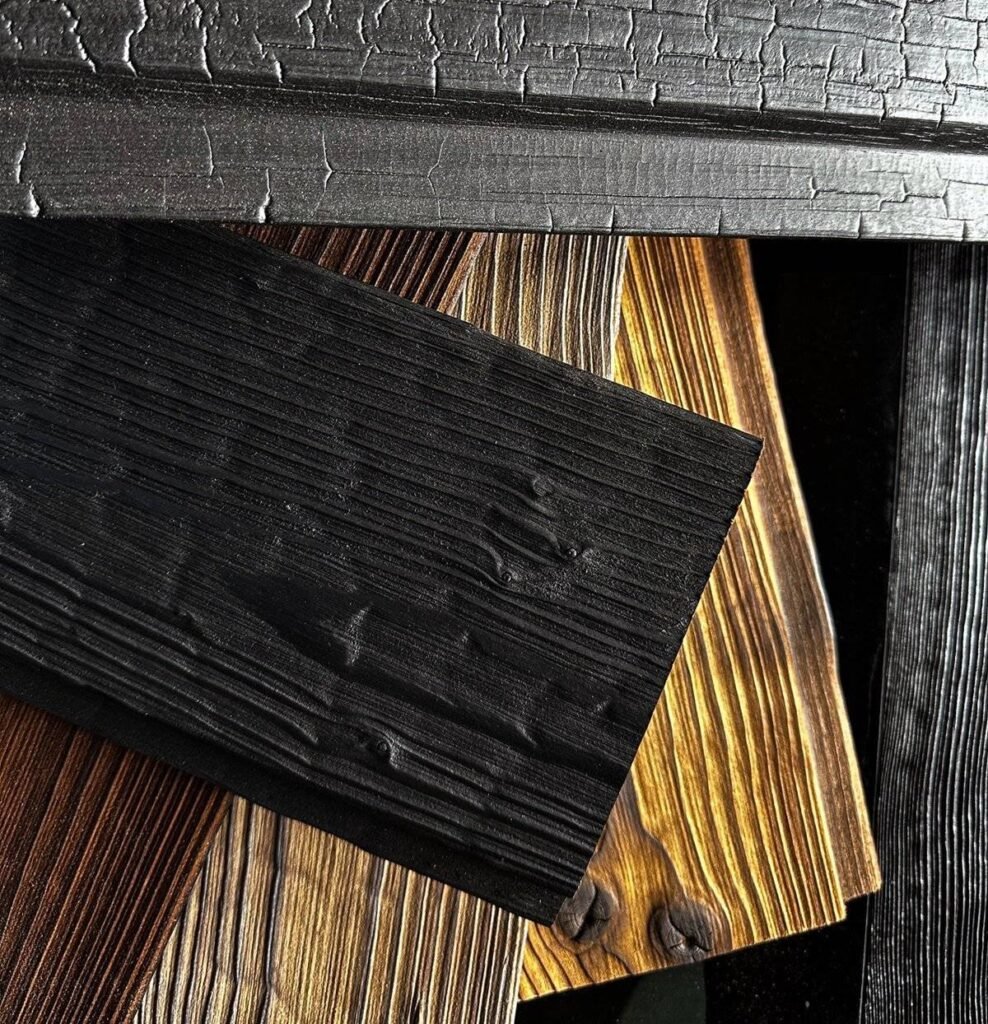
Outdoor areas are not just limited to a property anymore—they are statements of design. The trio comprising homeowners, architects, and designers is currently looking for strong materials, good for the environment, and have a great appearance at the same time. Among the solutions already existing and still attracting more attention is the old Japanese technique of burning wood called Shou Sugi Ban. It creates a remarkable harmony of the old and the new when applied to fences and has the added advantages of being durable and having a distinctive character.
The Art Behind Charred Wood Design
Shou Sugi Ban is an ancient and conventional practice that involves the deliberate charring of the outermost layer of wood. The method of controlled burning is done to wood that amplifies its inherent qualities, hence making it more resistant to rot, insects and moisture. The resulting texture of the wood is very rich and colorful, ranging from black to gray silver. The natural variations in color guarantee that each time the method is used, it will produce a one-of-a-kind fence.
In today’s outdoor design, this technique has been reborn to match the current aesthetics. Charred wood fencing can be installed in a way that perfectly fits with both classic and modern architecture due to the implementation of clean lines, minimal hardware, and careful installation.
Why Charred Wood Fencing Stands Out
Durability is one of the main benefits of charred wood fencing. The charring procedure makes the wood fibers impermeable, thus allowing the fence to endure extreme weather with no need for maintenance often. Compared to painted or stained fences that need reapplication of the coating at regular intervals, charred wood takes its time to become even better, getting more and more depth throughout its life.
Sustainability is another advantage. The method is free from the use of chemical preservatives, thus it is a choice that is responsible towards the planet. The majority of designers are very much aware of the fact that this technique, despite creating visually appealing products, is in line with eco-friendly construction practices.
A Modern Take on a Timeless Technique
An elegantly crafted Shou Sugi Ban Fence is capable of turning an outdoor area into an exquisite architectural feature rather than just a separation. It is a perfect match with natural stone, concrete, metal accents, and rich plants. Charred wood fencing, however, silently contributes to the overall temperature and contrast of the outdoor farms, whether for privacy, boundary demarcation, or simply as a part of the landscape.
Companies like Bauwn have accepted this method and its benefits by concentrating on skilled craftsmanship and the modern uses of this technique. Their way of working shows that it is possible to modify traditional practices to conform to today’s design standards and still retain the original character.
Versatility in Outdoor and Architectural Design
Charred timber fencing is a versatile material that is suitable for various types of projects, such as residential, commercial, and landscape. The fencing is applied in cities where it offers privacy and at the same time, it does not cover the aesthetic; in addition, in the countryside, the wood is used to limit areas of nature and to give the place a rustic yet elegant look.
The versatility of this material goes further than just fencing. Designers regularly combine charred wood surfaces with interior materials like spruce flooring to achieve an uninterrupted flow from the inside to the outside. The interplay of the dark, rough fencing and the bright, smooth wood inside generates a well-proportioned and unified design vocabulary.
Low Maintenance, High Impact
The charred wood fencing’s maintenance is one of its most attractive aspects. The carbonized layer effectively repels not only mold but also insects, thus preventing the need for applying chemicals at all. Aesthetic cleaning or oiling might be done occasionally, but the fence remains strong with very little effort.
Correct installation as well as a proper choice of wood are the main points of professionals doing Shou Sugi Ban fencing which they stress for getting the best performance. If the right measures are taken, the fencing can be around for decades and still look like new.
Design Harmony with Modern Materials
The charred wood fencing is in complete harmony with the new outdoor features, such as the metal gates, the glass panels, and the concrete walkways. In addition, it gets along with the natural landscaping elements such as stone walls and water features. A lot of designers using Bauwn products point out that charred wood can be just a backdrop or a focal point, depending on the design intention.
In certain projects, the designers go even further and use the same materials inside as well as outside by pairing burnt wood as the exterior finish with spruce for the flooring, which not only links but also gives the property an inviting feel all over.
A Statement of Craft and Quality
Selecting charred wood fencing is not only a matter of aesthetics; it also conveys a message about quality, skill, and respect for the old methods. The charred wood’s richness, feel, and life span are indicative of a building concept that takes into account the importance of the right appearance and usefulness.
In the midst of the rising demand for eco-friendly and eye-catching materials, Shou Sugi Ban fencing is still one of the main choices for designers and homeowners who want their gardens to be classy and long-lasting. Due to artisanship provided by companies like Bauwn, this old method is brought to the new world of contemporary gardens.
FAQs
1. How long does charred wood fencing last?
When properly crafted and installed, charred wood fencing can last several decades. The charring process enhances resistance to moisture, insects, and rot, significantly extending the lifespan compared to untreated wood.
2. Does charred wood require regular maintenance?
Maintenance is minimal. Some owners choose to apply natural oils occasionally to maintain color, but structurally, the fence remains durable without frequent treatments.
3. Is Shou Sugi Ban suitable for modern homes?
Yes, it works exceptionally well with modern architecture. Its clean lines, rich texture, and natural tones complement contemporary materials like steel, glass, and concrete.
4. Can charred wood be paired with other wood finishes?
Absolutely. Designers often pair charred wood exteriors with lighter interior materials such as spruce flooring to create visual balance and continuity throughout the space.