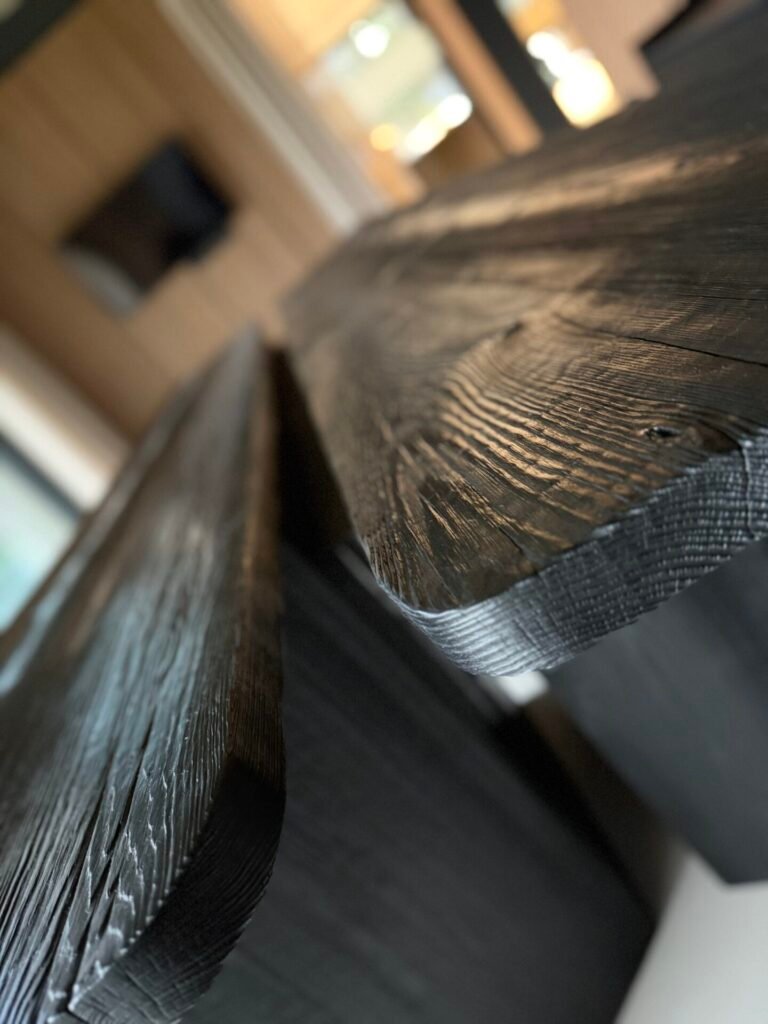
Charred wood is a primary choice for many homeowners and architects who want sophisticated interior and exterior designs. The reason is its elegant look, which enhances over time. Its flexibility of use and low maintenance are a few other reasons that make it a preferred choice. Accoya wood, when prepared with the Japanese shou sugi ban technique, gives something really special. Better looks. Better performance. Longer life.
Shou Sugi Ban – the technique
Shou sugi ban is a Japanese wood preservation method. The surface of the wood is charred with fire. That’s the whole process.
Here’s what the charring does:
- Fights rot – The burned layer keeps moisture out.
- Repels insects – Bugs stay away from charred wood.
- Resists fire – Sounds weird, but charred wood is harder to ignite.
- Looks amazing – That deep, dark texture is impossible to fake.
Traditionally, shou sugi ban was done on cedar. These days, builders use it on all kinds of wood. One of the best matches is Accoya.
What Makes Accoya Wood Special?
Accoya isn’t a species. It’s a modified softwood — usually radiata pine — treated through a process called acetylation. The wood’s cell structure gets permanently changed.
What you get:
- Super stable – Barely swells or shrinks with moisture.
- Rot-resistant – A good choice for in-ground applications.
- Long-lasting – 50-year above-ground warranty. 25 years in-ground.
- Low maintenance – Holds finishes really well.
- Sustainable – Made from fast-growing certified timber.
Accoya is already built to last. The shou sugi ban technique enhances its strength.
Shou Sugi Ban And Accoya – A Reliable Combination
Most charred wood looks great. But Accoya makes it perform even better.
The char layer stays intact
Regular timber moves with the seasons. That movement cracks the char over time. Accoya barely moves at all. The charred surface holds together much longer.
Double the protection
Accoya resists moisture from the inside out. The char adds another barrier on top. It becomes highly resistant to rain, humidity and temperature.
It lasts for decades
After 10 to 15 years, standard charred wood may need basic maintenance like surface oiling. Accoya retains its condition for much longer. It needs way less upkeep.
It works for lots of projects
Cladding, fencing, and Accoya wood decking all benefit from this combo. Great looks and great performance in one.
Shou Sugi Ban Accoya vs. Other Wood Options and Standard Cedar or Pine
Cedar is the classic choice for shou sugi ban. It works fine. But it’s not as stable as accoya and needs more upkeep over time. Charred wood on standard cedar may need retreatment every few years outdoors.
Accoya just holds up better. Less work. Longer life.
Accoya vs. Spruce Flooring
Spruce flooring is popular indoors. It’s affordable and looks good. But spruce isn’t great outdoors without heavy treatment. It’s softer and more vulnerable to moisture.
Charred accoya is built for outdoor exposure. They serve different purposes really. It works great inside. Accoya with shou sugi ban works great outside.
Accoya vs. Composite Decking
Composite is low maintenance. But it doesn’t feel like real wood. It gets hot in summer. And it doesn’t age well.
Accoya wood decking with a shou sugi ban finish gives you real wood texture, a natural look, and a surface that gets better with age.
Accoya vs. Thermally Modified Wood
Heat treatment improves stability and rot resistance. But accoya’s acetylation process generally goes further — especially for moisture resistance and long-term durability.
Accoya is the stronger base material. Simple as that.
What Does It Look Like?
This is where it gets fun. The visual range is huge.
Common finishes:
- Deep charred – Full black. Almost metallic in certain light.
- Brushed and oiled – Softer look with visible wood grain.
- Lightly charred – Dark brown tone. Less dramatic but still great.
- Wire brushed – Raised grain with contrast between char and natural wood.
Over time, UV exposure gives it a silvery gray patina. Some people love the natural aging. Others seal the wood to keep the original dark tone. Both look great.
Where Can You Use It?
Accoya with shou sugi ban is pretty versatile.
Exterior cladding. The most popular use. Large panels of charred wood on a wall make a huge statement. Accoya handles all weather without fuss.
Decking. Accoya timber decking with a shou sugi ban finish is a premium pick. Handles foot traffic, rain, and UV really well.
Fencing. Looks sharp. Low maintenance. The char layer handles rain and insects without regular retreatment.
Feature walls. Interior feature walls with charred accoya wood add texture that paint just can’t match.
Garden structures. Pergolas, planters, raised beds. Anywhere wood meets moisture, accoya’s durability pays off.
How to Source and Install It
Accoya with shou sugi ban is a premium product. You won’t find it at your average lumber yard. Look for specialists in modified timber and architectural cladding.
Bauwn is a solid option for quality shou sugi ban cladding and modified wood products. They carry a good range of charred wood options built for both performance and aesthetics.
A few install tips:
- Use stainless steel fixings – Standard fixings can stain accoya.
- Leave expansion gaps – Good practice even with stable wood.
- Seal end grain – End grain soaks up moisture. A sealer helps a lot.
- Follow finish guidelines – Especially for oils applied over the char.
How Much Maintenance Does It Need?
Bauwn and other suppliers generally recommend:
- Light cleaning every year or two.
- Oil or finish reapplication every few years to keep the color.
- Quick check on fixings occasionally.
That’s it. Painted timber or standard cladding needs stripping and recoating every few years while charred wood doesn’t demand much care.
Is It Worth the Cost?
Shou sugi ban accoya costs more upfront. But it lasts longer and needs little maintenance. No replacing or retreating is needed every decade. Thus, it is a great investment that holds up over time. Using charred Accoya wood in your structure is a smart decision that offers great aesthetics, durability and peace of mind for decades.
If you are looking for something that looks incredible and keeps performing for decades, contact Bauwn for shou sugi ban accoya. We have exhaustive experience in shou sugi ban home and commercial projects.
Frequently Asked Questions
1. Is shou sugi ban accoya a good choice for home exterior?
Yes, it is Accoya wood charred using shou sugi ban method. Accoya is known for its durability and low maintenance.
2. How long does charred accoya last?
Accoya can last up to 50 years above ground. The charred surface adds further protection from moisture and insects.
3. Can charred Accoya wood be used for decking?
Yes, Accoya timber decking with shou sugi ban handles foot traffic, UV and rain better.
4. Does it need a lot of maintenance?
Not at all. A clean every year or two and occasional oiling is enough.
5. How is charred wood accoya different from spruce flooring?
Spruce flooring is a softer wood used indoors. Charred accoya wood is built for outdoors — cladding, decking, and fencing where weather resistance matters most. Very different use cases.