Japanese Larch Wood Cladding Netherlands: From Natural to Charred Finishes
By BAUWN·27 October 2026·6 min read
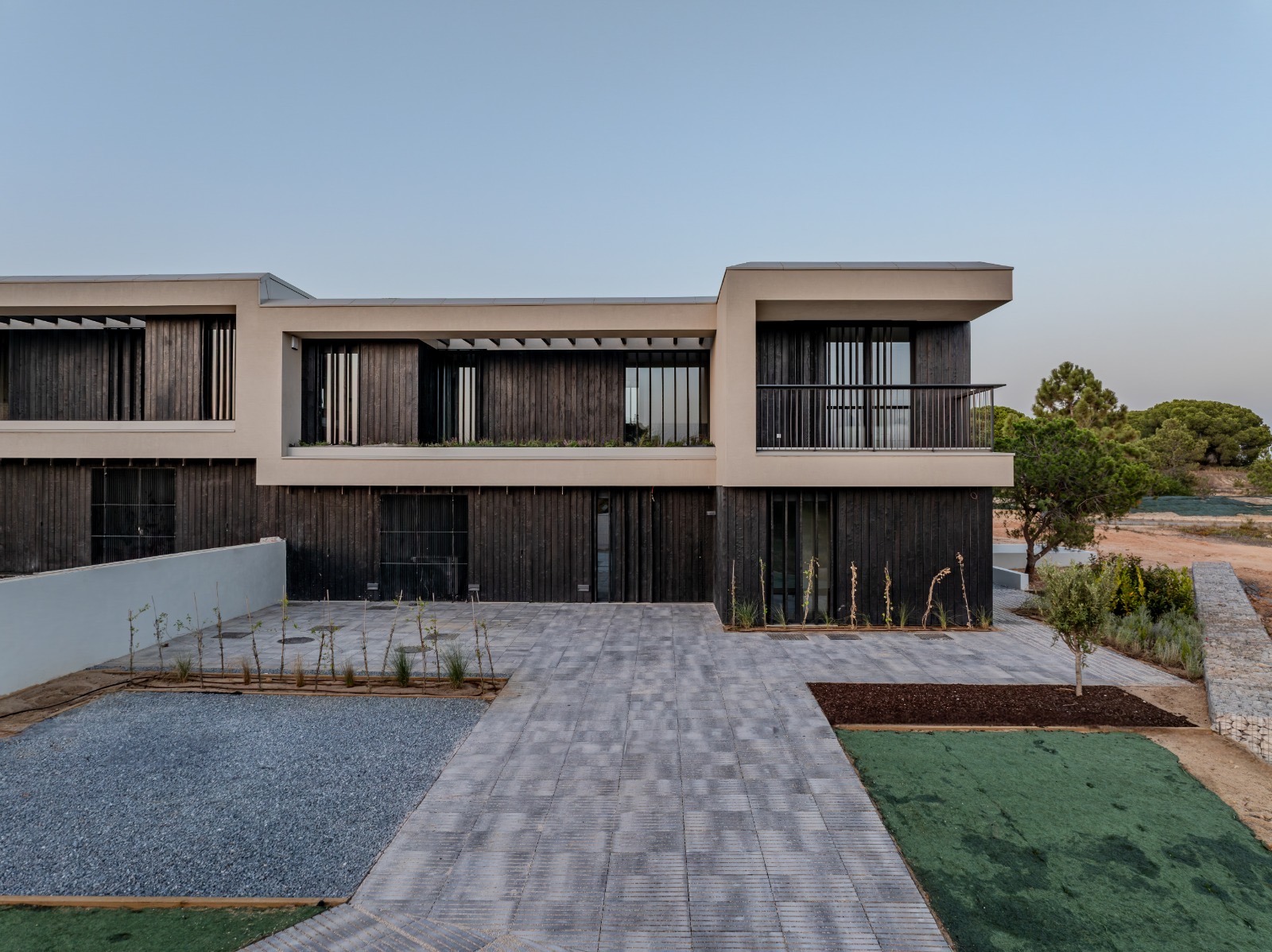
Constructing or remodelling a house in the Netherlands is an extremely personal process. One would like a wonderful-looking façade to provide protection from the unpredictable weather in Holland, while at the same time providing a house that is uniquely one’s own. Finding a fine balance between longevity and aesthetics might seem quite difficult at times. In case you get stuck here, you should know that there is a solution in the form of the Japanese larch. It provides natural grains and warmth, while various finishes will give it an entirely new appearance.
Today, we are discovering how Japanese Larch becomes an architectural wonder!
Why Japanese Larch Works for Exterior Cladding
Japanese larch, also known as Larix kaempferi, is distinguished by its unique texture and the contrasting softness of its earlywood and hardness of latewood. This feature is most pronounced when dealing with Japanese larch timber, particularly in charring.
The natural appearance of this timber species is appealing for architects and homeowners due to the individuality of each plank and the lack of a uniform appearance.
This versatile timber can be beautifully utilised in garden structures, screens, terrace roofs, and selected interior applications. However, its true strength shines when used for larch wood cladding on exterior façades. In the case of exposed façade applications, the technical detailing is just as important as the timber itself. This includes planning for a proper cavity, correct profiling, drainage, and choosing the right fixing system.
That is why using Japanese larch wood as façade cladding should be viewed as an integral part of the façade design process.
Natural Larch: Warm, Simple and Timeless
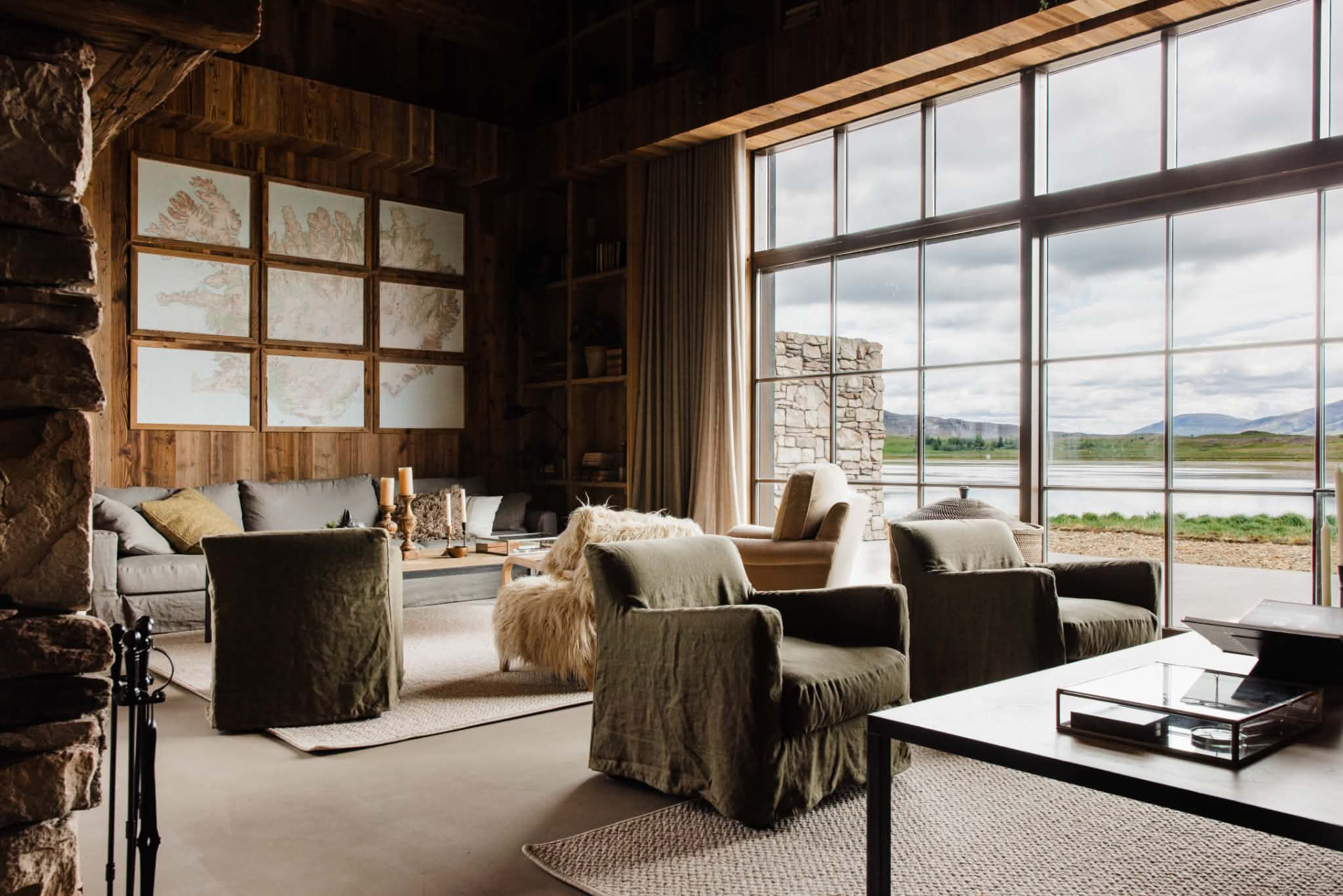
It is somehow comforting when natural timber is used in construction. Timber brings warmth to concrete, glass, brick, and stone structures, whereas the possibility to age contributes to the development of architecture through time.
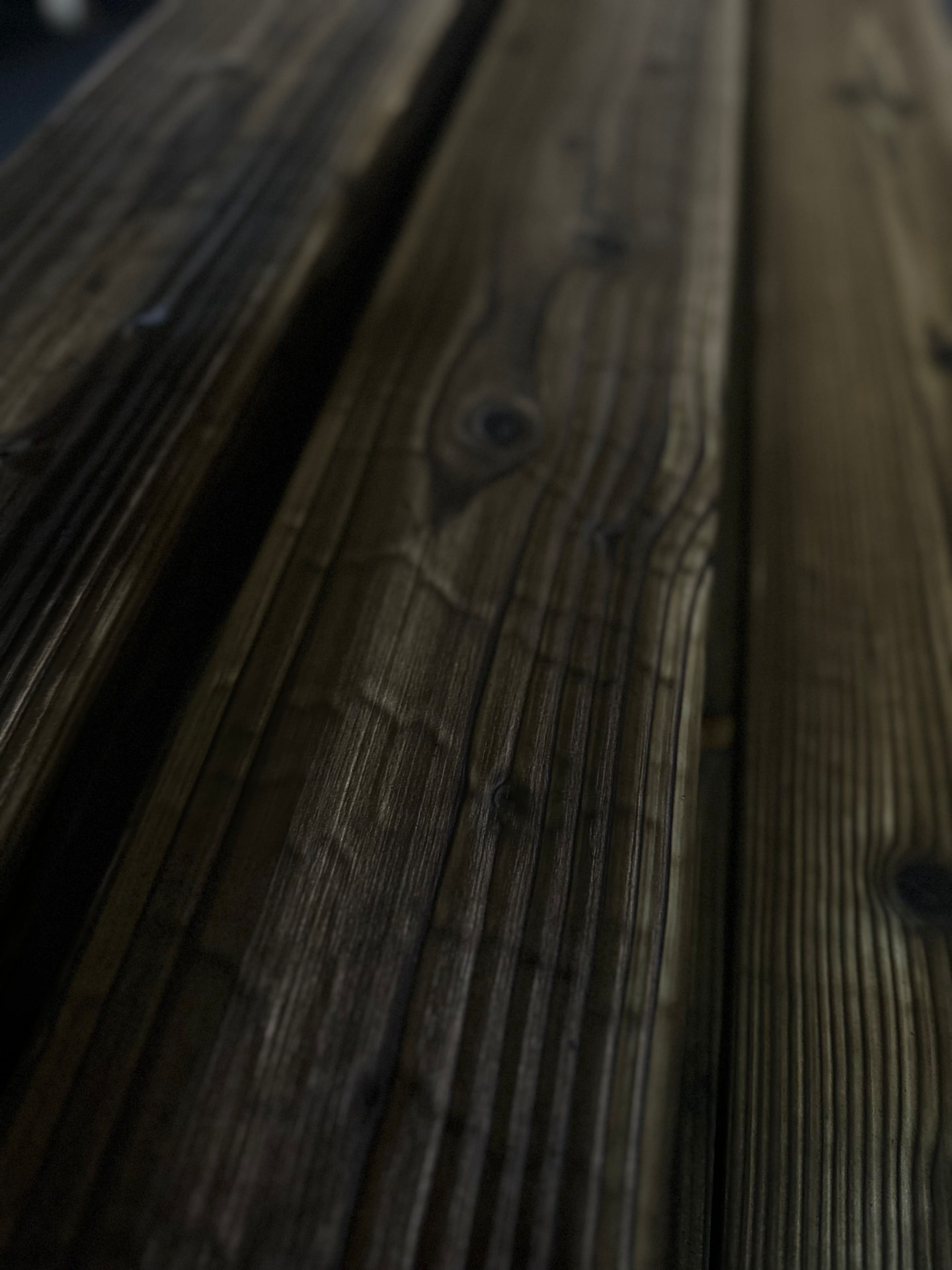
Natural Japanese larch is a wood with a warm tone of colour and visible grain and knots. As a rule, natural timber under the influence of sunlight and weather changes the colour of the surface and becomes slightly greyish. This is not always a drawback, but on the contrary, according to many architects, it is just an advantage of natural wood.
Therefore, natural larch is a perfect material for houses and buildings where it is necessary to establish a harmonious connection with the surrounding environment.
While choosing larch wood nederlands it is important to pay attention to the change of colour under the influence of weather conditions.
Brushed Larch: Bringing Out the Grain
In case natural wood is not enough, brushing will help achieve a textured surface.
Brushing takes away some of the softness from the timber but keeps more hard growth rings exposed. The effect is one of greater texture and variation in how it reflects light.
This technique is especially suitable for modern architecture projects where texture plays an important role. A brushed surface can be almost discreet at a distance but show great details when inspected up close.
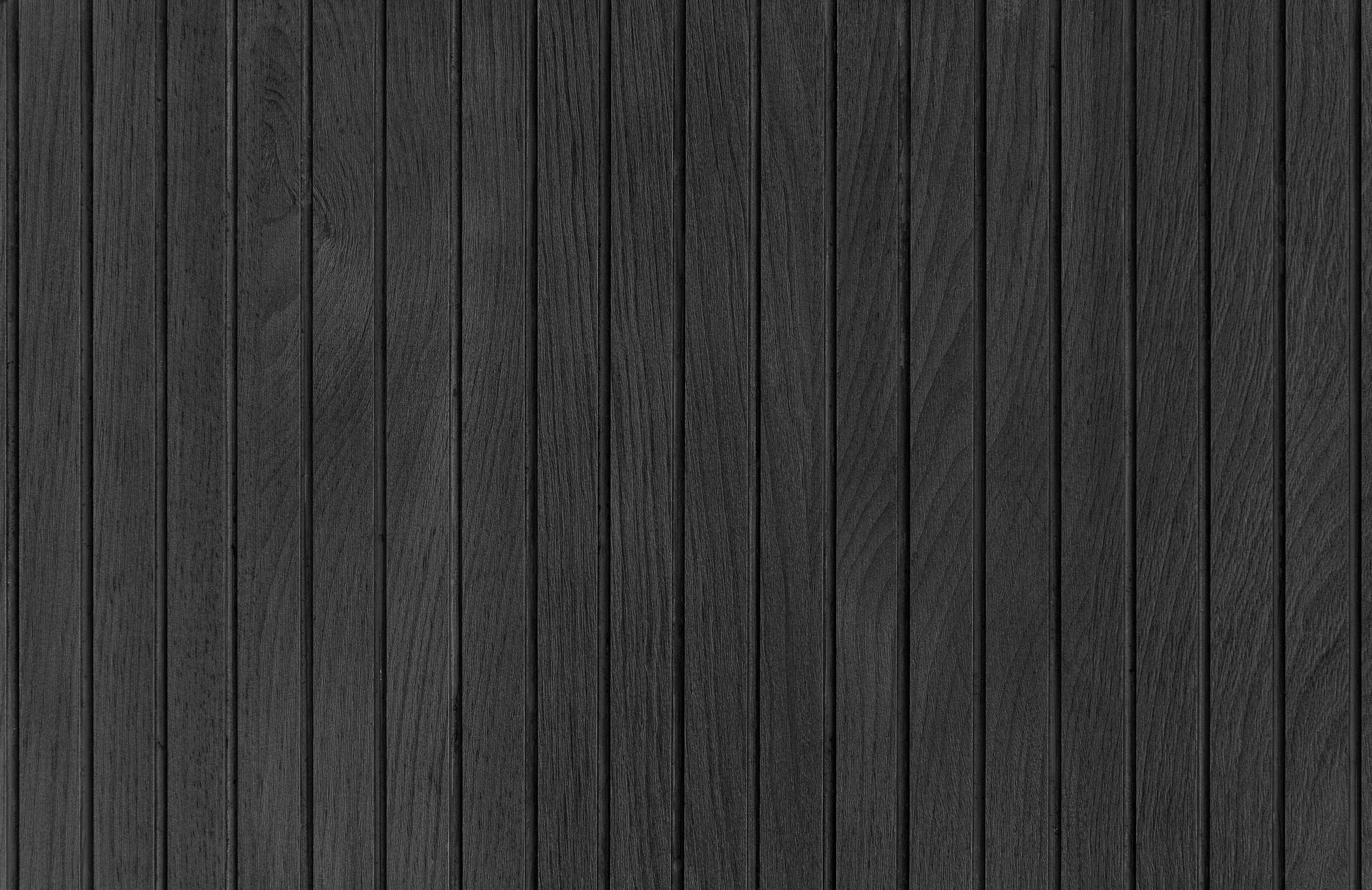
At BAUWN, brushing is also included in the procedure of creating KIME surfaces. Here, the charring is followed by brushing back in order to expose the natural grain pattern of the timber. The surface gets another texture as opposed to a charred surface with the carbon layer intact.
Charred Larch: When Timber Meets Fire
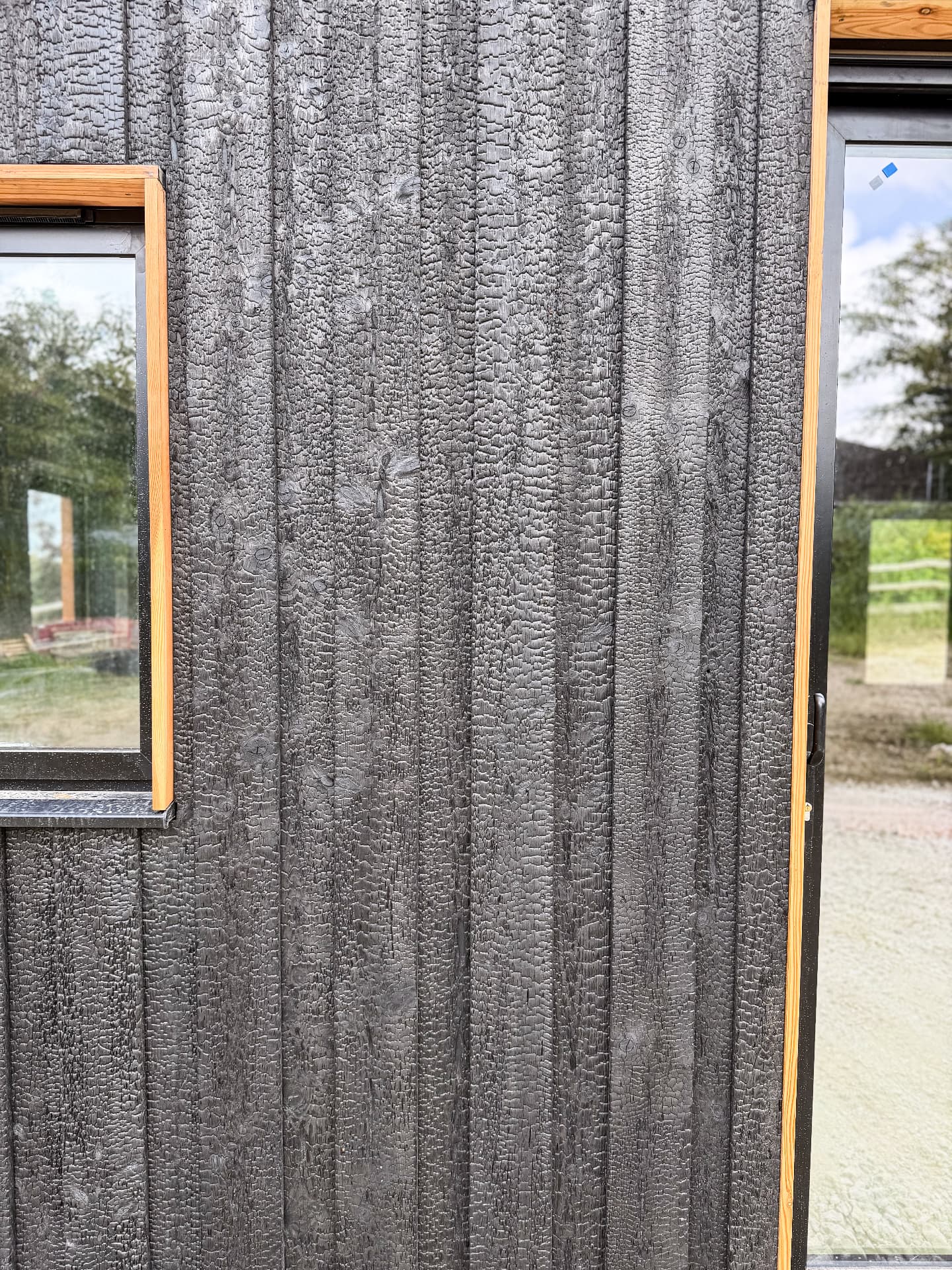
Charred timber has a completely different presence. Instead of hiding the natural character of the wood, controlled charring transforms it.
The Japanese tradition of Yakisugi is closely associated with charred timber cladding. However, it is important to understand that authentic Yakisugi traditionally refers to Japanese cedar. Larch can also be carefully charred to create a similar visual language, but the species and process should always be checked before specifying a product.
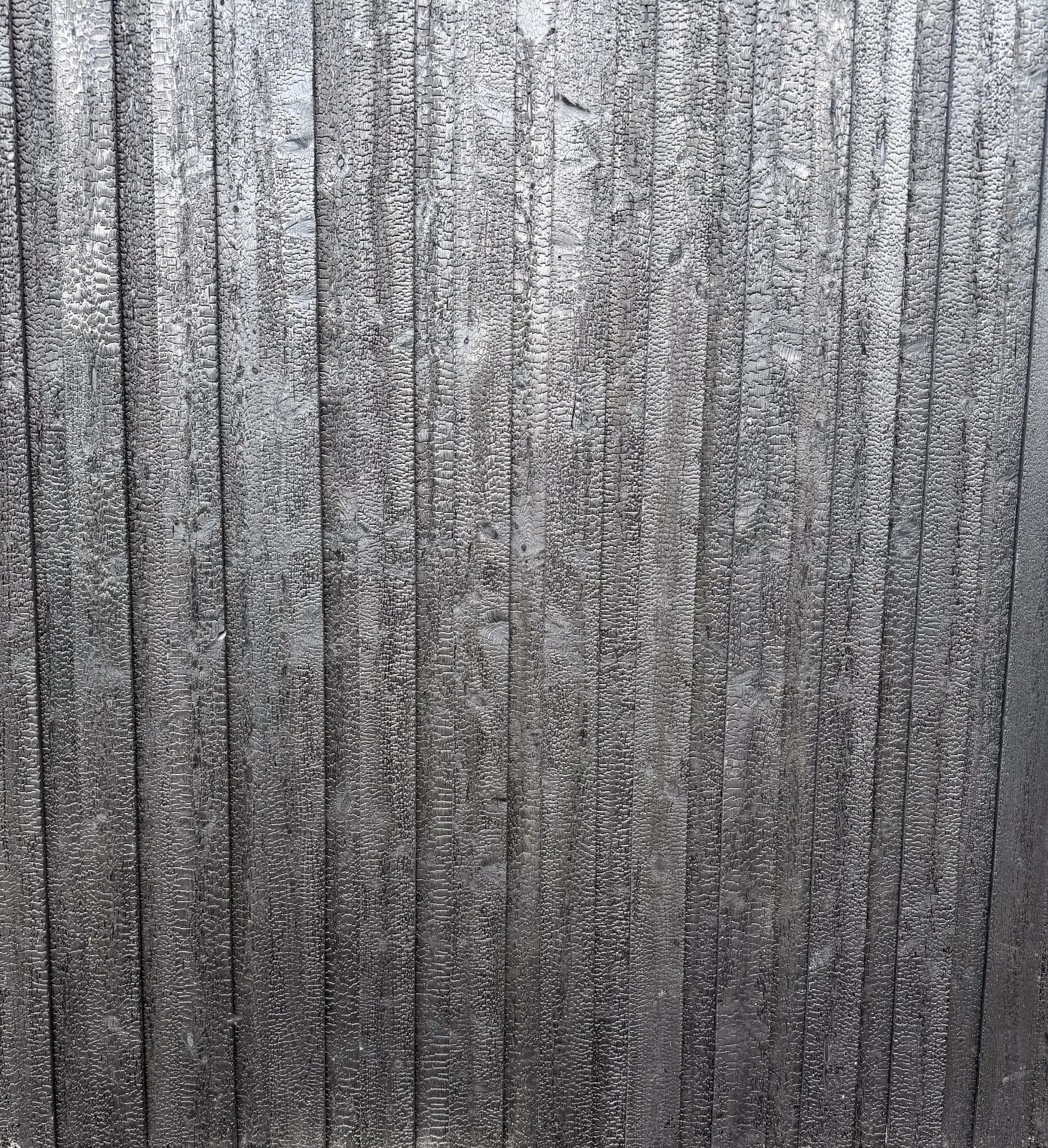
Larch has a prominent structure with a rich resinous latewood, which provides charred surfaces with a great depth. According to the technology used, the carbon crust can either be left on a surface or brushed off to reveal the wood grain underneath.
BAUWN offers both approaches through its larch surfaces. KAEN preserves the carbon crust, while KIME brushes the charred surface back to create a strongly textured finish.
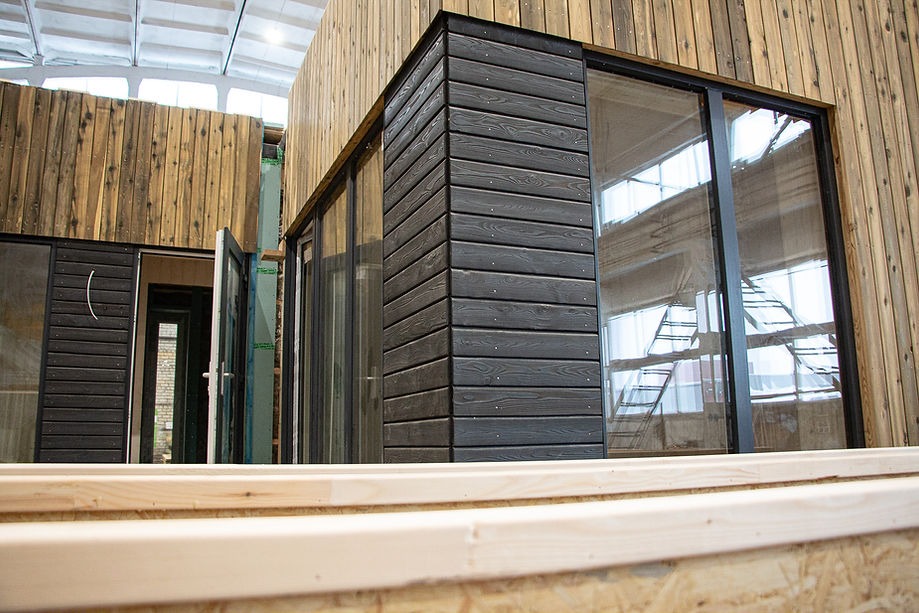
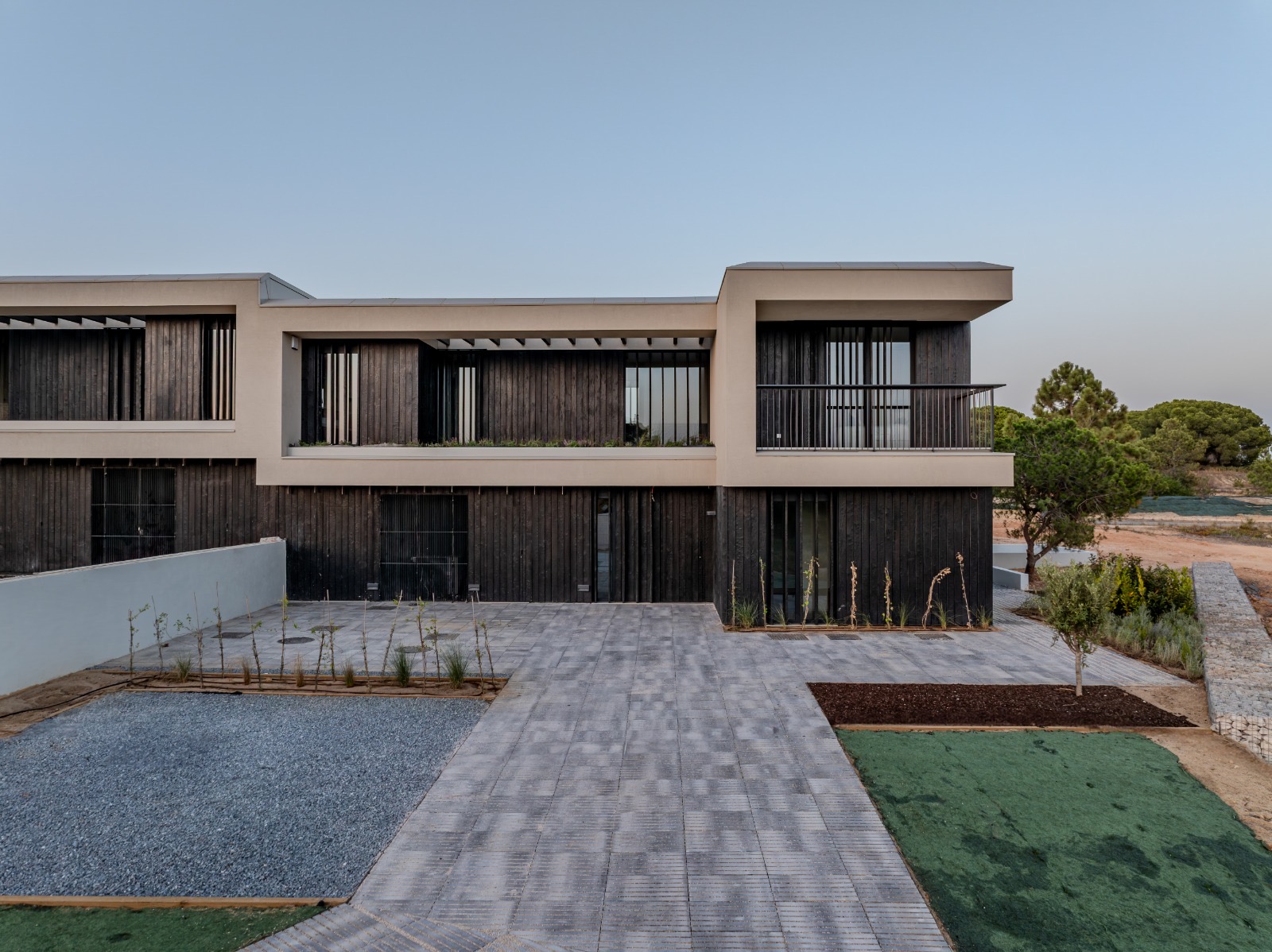
For a bold architectural statement, charred larch wood cladding can create a striking contrast with light render, natural stone, brick, glass, or planting.
Natural vs Brushed vs Charred Larch
Choosing a finish becomes easier when you start with the feeling you want the building to create.
| Finish | Appearance | Best suited to |
|---|---|---|
| Natural | Warm, organic and understated | Homes, rural settings and minimalist designs |
| Brushed | Textured with stronger grain definition | Contemporary façades and detailed designs |
| Charred | Deep, dramatic and sculptural | Statement façades and modern architecture |
Natural larch works well when you want the timber itself to remain the focus. Brushing adds texture without completely changing the material’s visual identity. Charring creates the strongest transformation and can give a façade a darker, more architectural character.
There is no one perfect finish. Your choice will depend on your building, your surroundings, how the material is installed, and how you want the material to age over time.
Why the Dutch Climate and Design Matter
The Netherlands has a strong tradition of using natural materials in architecture. Timber façades can sit comfortably beside brick, concrete, glass, and planted landscapes, making them useful for both contemporary homes and commercial projects.
At the same time, Dutch façades face changing climatic conditions during different times of the year. Rain, moisture, sunlight, and wind have an impact on the timber used in exteriors. Design becomes very important in such cases.
Ventilation of the cavity behind the façade is a very important consideration in terms of managing moisture. Profile and drainage details should be taken into account so that the timber façade is able to function as intended. Technical experts suggest using the Shadow Gap profile for exposed exterior larch applications over a ventilated batten cavity.
In case one is researching larch wood nederlands, it would be best to remember one thing: never select timber only by its looks.
How to Choose the Right Larch Finish
Consider the architecture first, not the product itself.
If you are looking for warmth and softness, consider the natural finish. If the texture of the surface is essential for your project, consider the brushed one. If you seek a more distinctive look and a dark façade, consider the charred one.
There is also the option of seeing the material in person. Natural variations in grain, texture, and colour can be hard to tell from the picture on the screen.
BAUWN provides material samples, which allow architects, designers, contractors, and homeowners to compare surfaces in order to make their final choice. In the case of a Dutch project, the material sample can become especially handy because the timber will have to complement the brick, stone, concrete, or landscaping there.
Whichever you choose – larch wood nederlands or any other timber, the material sample will definitely help with making the decision.
Conclusion
A home requires a façade that complements your personal style and gives you total protection against all elements. Whether you are drawn to the beauty and vitality of the living silvering timber or prefer the hard-edged simplicity of the charred timber, there is no better choice than Japanese larch.
Ready to transform your property into an architectural masterpiece? View our premium wood cladding collections at BAUWN today and let us help you bring your dream home to life.
Frequently Asked Questions
What is the lifespan of Japanese Larch Cladding in the Netherlands?
Provided that it is correctly installed and well ventilated, high quality larch cladding can last from 30 to 50 years. High density and resin content help it remain durable regardless of the climate conditions.
Does Charred Larch Wood stain clothing?
No, it does not. As a result of charring, the wood gets brushed and impregnated with natural oils, which will keep the carbon layer intact.
Is Japanese Larch an eco-friendly construction material?
It certainly is. It is an absolutely natural and renewable resource. It doesn't require chemical treatment throughout many years of its service life.
Can I combine natural and charred finishes on one property?
Certainly. Contrast design using natural golden larch and charred timber is really eye-catching and beautiful.
Do I need to paint or treat charred wood cladding?
No painting is required. The carbon layer created by the fire acts as a permanent shield, making it one of the lowest-maintenance exterior options available.